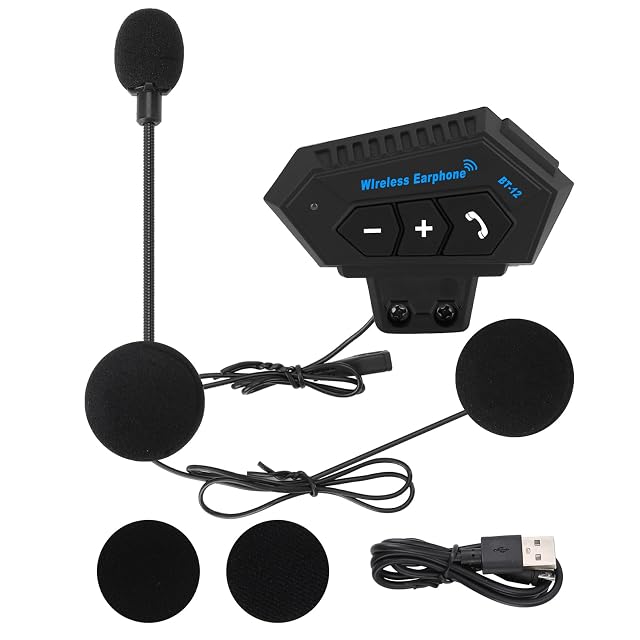
Bluetooth intercom pairs units in a chain. It is simple, it is cheap, and when one rider peels off for fuel the chain behind them breaks.
Mesh forms a network that re-routes around a missing unit. On two riders that is worth nothing. On six it is the reason the category exists.
Read the range figure properly
Every range on this shelf is line of sight. A bend, a lorry or a row of buildings takes it away.
One unit here publishes 8 km when at least six people are connected — which is honest, because it tells you the figure describes a chain of units relaying rather than one unit reaching that far.
The figure most listings omit
Battery life.
The most expensive intercom in this catalogue does not publish it. One of the cheapest publishes battery capacity, talk time, standby time and charge time — and the charge time is the one that decides whether the unit is ready on a Saturday morning.
Two things to settle before ordering
Whether it is an intercom at all. One product in this family is a phone headset: it connects to a telephone and not to another rider, and the family name covers both.
Whether it pairs across brands. Two riders with units from different makers is the normal case, and makers that handle it say so.
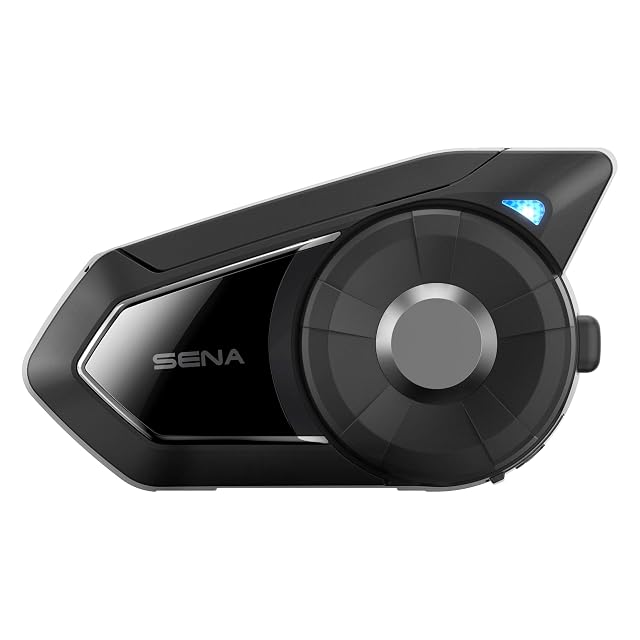
Mesh intercom · up to 24 in a group mesh · 8 km with six riders · 2.0 km Bluetooth
A mesh intercom publishing two mesh modes, a private group of up to 24, a range extendable to 8 km when at least six people are connected, and 2.0 km over Bluetooth intercom.
Best for: Riding in a group large enough that a paired chain of two-way links stops working.
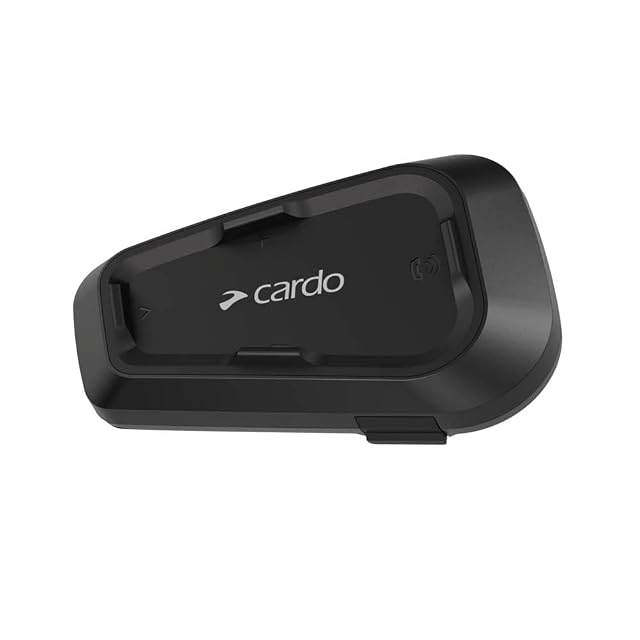
Two-way intercom to 400 m · 32 mm speakers · waterproof · over-the-air updates
A two-rider Bluetooth intercom published at 400 m range with 32 mm speakers, waterproof construction, over-the-air software updates and stated pairing with any brand of Bluetooth headset.
Best for: A rider and a pillion, or two riders who always travel as a pair.
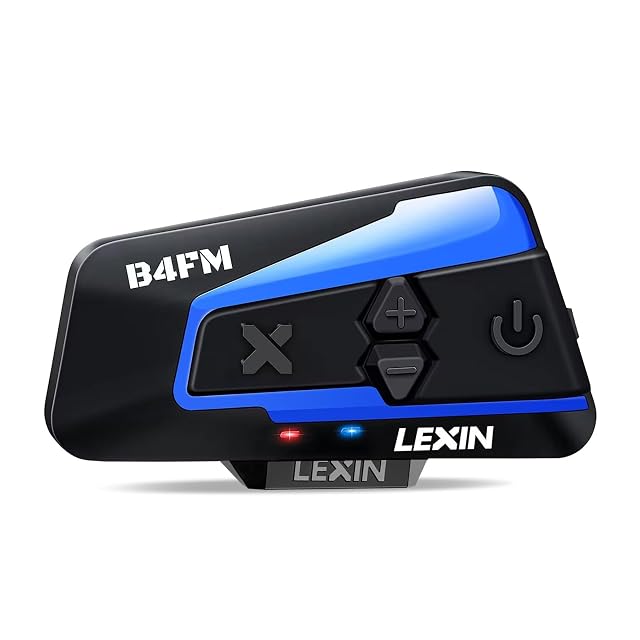
Up to 10 riders · 2000 m · DSP and CVC noise reduction · 800 mAh, 15 h talk · IP67
An intercom published for up to 10 riders at 2000 m, using DSP and CVC noise reduction the maker states cuts wind and engine noise by over 90%, with an 800 mAh battery giving 15 hours.
Best for: A group of riders who want published numbers rather than published adjectives.
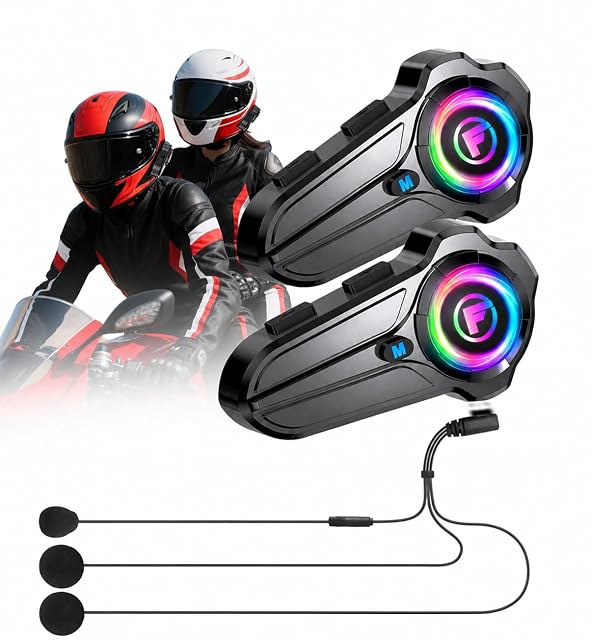
Two riders to 1000 m · Bluetooth 5.3 dual chip · 1000 mAh, 30 h · IP67 · sold as a pair
A pair of intercom units published for two riders at 1000 m, on dual Bluetooth 5.3 chips, with a 1000 mAh battery giving up to 30 hours, IP67 protection and RGB lighting.
Best for: Two riders buying both units at once at the lowest price per unit here.
Hands-free calls · 8 h working, 160 h standby · hook-and-loop mounting · no intercom published
A helmet Bluetooth headset for hands-free calls and music, with 8 hours of working time, hook-and-loop mounting and an auto-off after 5 minutes unpaired.
Best for: Phone calls and music on a commute, where nobody else needs to be on the line.
What is the difference between mesh and Bluetooth intercom?
Bluetooth pairs units in a chain, and the chain breaks when one unit drops out. Mesh forms a network that re-routes around a missing unit. On two riders it makes little difference; on six it is the whole thing.
Is a published range realistic?
It is a line-of-sight figure. Bends, buildings and traffic all reduce it. One unit in this catalogue publishes a mesh range with its condition attached — at least six connected riders — which is a published figure telling you what it actually describes.
Do intercoms from different brands talk to each other?
Often, over Bluetooth, and makers state it explicitly where it works. Mesh generally works between mesh units of the same system. Two riders with different brands is the ordinary case, so it is worth checking before buying.
For : A group of riders who want published numbers rather than published adjectives.
Main strength : The most completely specified intercom here — riders, range, battery capacity, talk time, standby, charge time and IP rating all published
Main limitation : The 90% noise reduction figure has no stated measurement condition
The models here come from the catalogue of this site. Specifications are those published by the manufacturer and on the Amazon product page; prices are what Keepa reported on the date below, and both move. The ranking uses declared specifications, the balance of stated strengths and limitations, and price. No product on this site has been physically tested, and nothing here claims otherwise.
Last checked on
Nothing written into the text below is a current price. Where an amount appears in a sentence, it is the reading taken on the day that sentence was written; what a shop is asking at this moment loads beside the product itself, and that is the figure to go by.
The tool we use ourselves
Kit chosen? Now make sure the price is real.
Helmets and riding gear are discounted over and over through the
year — hardest of all in the weeks when nobody is riding, which is
months away from when most of it is bought — and a struck-through
figure on its own says nothing whatever about what the same model was
charged at four weeks ago.
UniverTrack holds a week-by-week history for every
retailer, which means a reduction is judged against a price somebody
actually paid rather than one dreamed up for the sale — and it tells you
when the moment to buy has genuinely come.
Real price historyBuy-now alertsAI buying assistant