A hinge bought on purpose, and what it is approved for
The best flip-up helmets for 2026
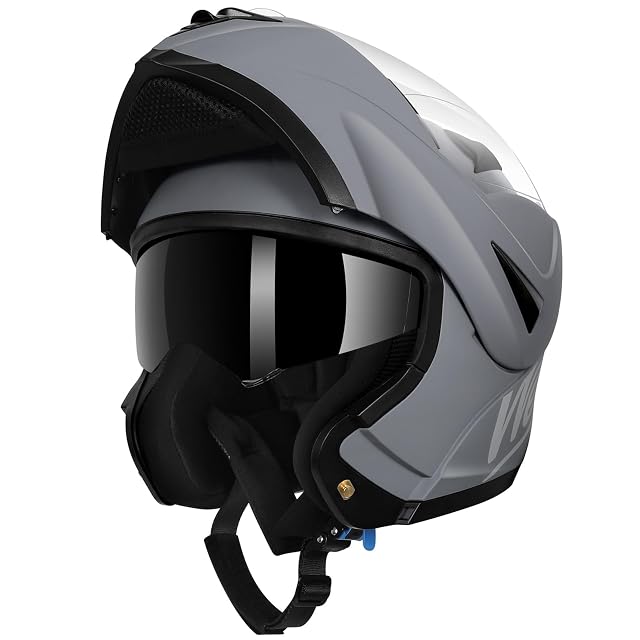
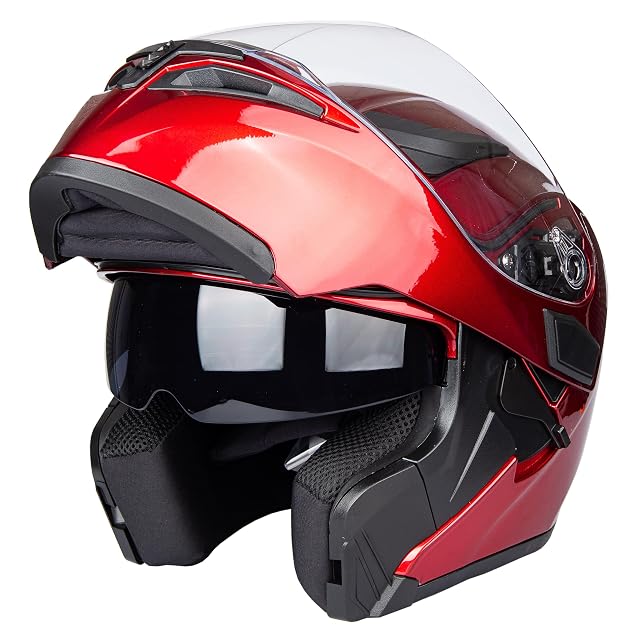
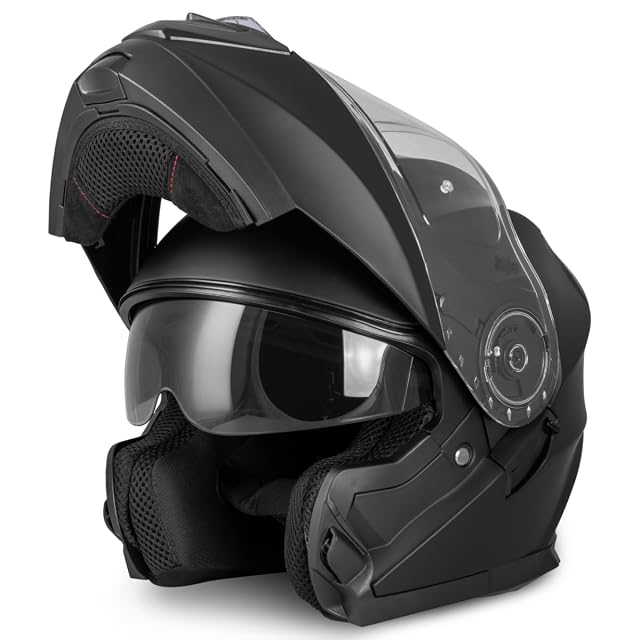
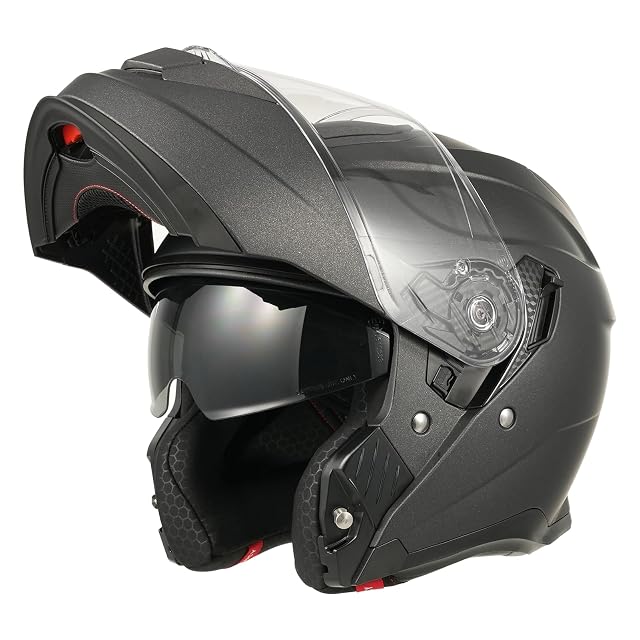
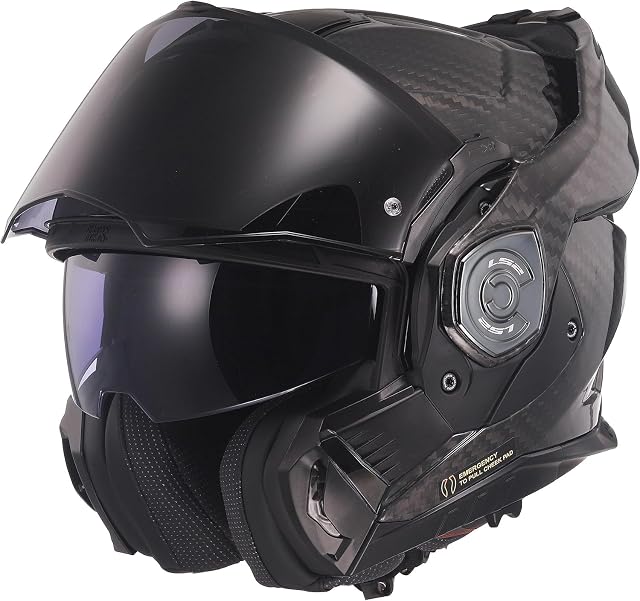
A flip-up helmet puts a hinge where a full-face has structure, so that the chin bar and visor lift together. People buy it for a set of ordinary reasons — glasses, a beard, a toll booth, a conversation at a fuel stop — and those reasons are good ones. What has to be read is what the approval covers, because here it is not a single statement. A helmet marked P/J has been tested and approved in both positions, closed and open; a helmet marked P alone is approved closed only, and its chin bar lifts for convenience rather than for riding. The letter is printed on the strap label and is one of the few places on this shelf where a single character changes what the product is. Beyond that, the hinge costs three things and each is measurable. Weight: the mechanism, the second shell section and the reinforcement around the pivot add mass, and a flip-up that weighs the same as a full-face has usually saved it somewhere else. Noise: every additional seam is a path for air, and the ones around a lifting chin bar sit close to the ear. And complexity: a latch, a release, often a drop-down sun shade with its own slider — more parts that have to still work after two winters of salt. Against that, a flip-up is the easiest helmet to put on and take off, which is not a small thing for a rider who stops often. We compare approval type and version, chin bar locking and release, published weight and the size it was weighed at, shell material and count, sun shade, visor fitting, liner removal and intercom provision.