Skip to content

Choosing a first riding jacket

The two things that separate a riding jacket from a coat are both printed on labels nobody reads in a listing.

Two labels, and they are the purchase

The garment class. EN 17092 grades the whole jacket — the abrasion resistance of the material, the seam strength, whether the armour stays where it should, and how much of you is covered. It is not a fabric figure and it is not a marketing tier.

The armour. Look in the shoulder and elbow pockets. A certified protector carries its standard, its level, its type and its size printed on it. A foam placeholder carries nothing at all, and a jacket with a high class and empty pockets is two purchases wearing one price.

What the listings will give you instead

A denier figure for the fabric, or the word Cordura, or a count of vents.

Denier weighs the yarn. It says nothing about how long a garment resists a slide, which depends on the weave, the seams and the stitching as much as on the thread — and which is exactly what the class exists to measure.

The fit question that gets missed

Sit on a bike in it. A jacket that fits standing rides up at the wrists and pulls at the shoulders in a riding position, and the armour then sits somewhere other than over your joints.

What to buy first if the budget is short

The jacket that fits, with pockets. Then certified armour to fill them. That order gives you a garment you wear and protection where it belongs; the reverse gives you neither.

The picks, and why they run in that order

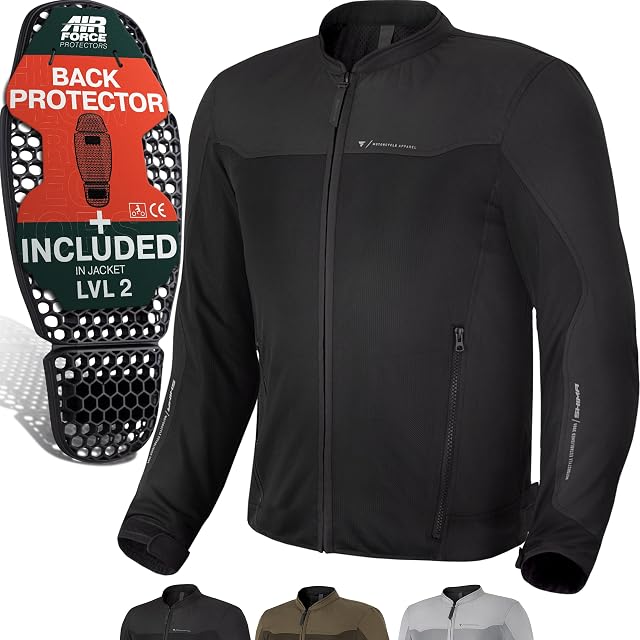
  1. SHIMA OpenAir

    Mesh summer jacket · honeycomb shoulder, elbow and back protectors

    A ventilated mesh summer jacket supplied with lightweight honeycomb-structure protectors at shoulders, elbows and back, sold with an explicit instruction to check the size chart.

    Best for: Hot-weather riding where airflow matters more than a jacket that covers three seasons.

    ≈ $130 / £96 / €96

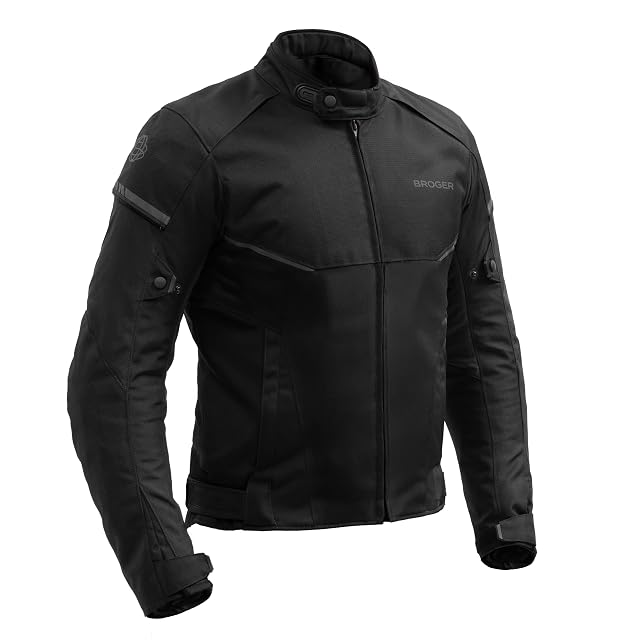
  2. BROGER Grid

    EN 17092 class AA · 600D and ripstop polyester · triple-adjustable armour

    A textile jacket certified to EN 17092 class AA, built from 600D and ripstop polyester with reinforced seams, triple-adjustable shoulder and elbow protectors and a back protector pocket.

    Best for: A rider who wants a certified garment class in writing before comparing anything else.

    ≈ €100

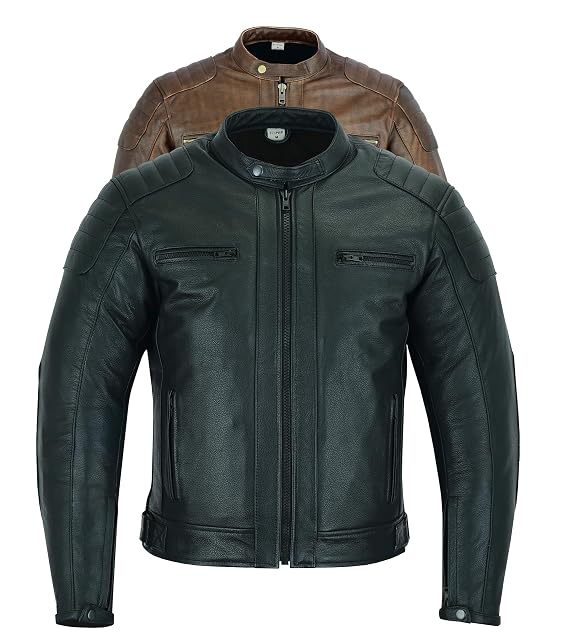
  3. Texpeed Class AAA leather

    Class AAA · aniline cowhide 1.2 mm · CE armour at three points · YKK zips

    A leather jacket published as class AAA in aniline cowhide at 1.2 mm, with CE-marked removable protectors at shoulders, elbows and forearms and original YKK zips.

    Best for: A rider comparing leather on published figures rather than on appearance.

    ≈ £110 / €135

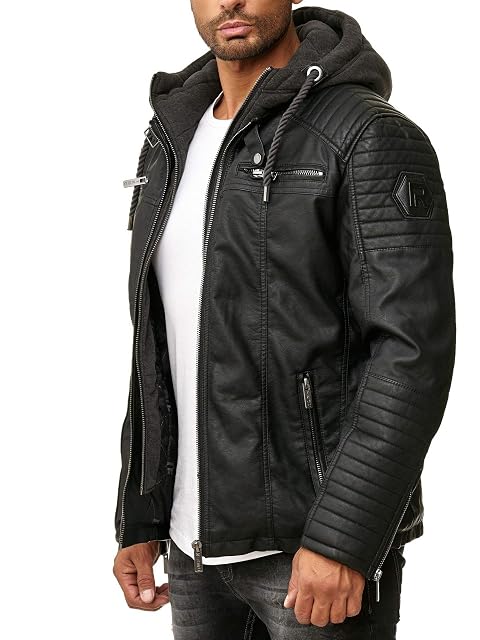
  4. Redbridge 2-in-1 hooded biker

    Synthetic leather (Kunstleder) · detachable hooded insert

    A biker-styled jacket in synthetic leather with a contrasting detachable hooded sweat insert. It is sold in the leather jacket aisle and it is not leather.

    Best for: City wear. The maker says so itself, and this page repeats it rather than dressing it up.

    ≈ £119 / €117

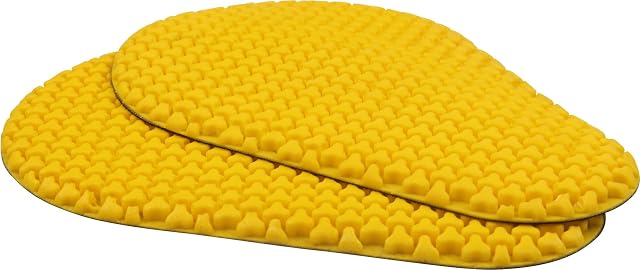
  5. SAS-TEC SC-1/KA

    6 mm · EN 1621-1:2012 · shoulder, elbow, knee or hip · flexible in the cold

    An ultra-thin 6 mm protector certified to EN 1621-1:2012, usable at four positions, with a patented design stated to keep its flexibility at low temperatures.

    Best for: Any armour pocket that will take 6 mm, in a jacket worn through winter.

    ≈ €13

The questions that come up first

Leather or textile?

Leather abrades predictably and can be repaired; it is heavy, slow to dry and needs breaking in. Textile is lighter, usually cheaper, often has a membrane, and a torn panel is generally finished. Both reach the same garment classes.

What is a garment class?

EN 17092 grades motorcyclists' protective clothing — AAA at the top, then AA and A, with separate classes for urban and lightweight garments. It covers the whole garment: material, seams, armour restraint and coverage. It is on a label inside.

Does it come with armour?

Sometimes, and often the pockets hold foam placeholders rather than certified protectors. Certified armour carries its standard, level, type and size printed on it. That check takes thirty seconds and decides most of the value.
Why each one, and for whom

SHIMA OpenAir · $130

For : Hot-weather riding where airflow matters more than a jacket that covers three seasons.

Main strength : A back protector is named as supplied, which is unusual at this price and is the pocket most often empty

Main limitation : No armour level published in the listing

Read the full review →

BROGER Grid · $100

For : A rider who wants a certified garment class in writing before comparing anything else.

Main strength : The only jacket in this family here that cites a garment standard and its class

Main limitation : Back protector pocket without a protector, as the listing states

Read the full review →

Texpeed Class AAA leather · $110

For : A rider comparing leather on published figures rather than on appearance.

Main strength : Publishes hide type and thickness together, which is the pair that makes leather comparable

Main limitation : The back protector is not stated as supplied

Read the full review →

Redbridge 2-in-1 hooded biker · $119

For : City wear. The maker says so itself, and this page repeats it rather than dressing it up.

Main strength : The material is stated plainly in the title rather than implied

Main limitation : It is synthetic leather, sold in a family of leather riding jackets — the distinction is the first thing a buyer needs

Read the full review →

SAS-TEC SC-1/KA · $13

For : Any armour pocket that will take 6 mm, in a jacket worn through winter.

Main strength : Publishes the standard AND its year, which is more precise than any other protector here

Main limitation : The level is not published, and EN 1621-1 classifies two

Read the full review →

What each price bracket buys

Deciding in one line

How this guide is built

The models here come from the catalogue of this site. Specifications are those published by the manufacturer and on the Amazon product page; prices are what Keepa reported on the date below, and both move. The ranking uses declared specifications, the balance of stated strengths and limitations, and price. No product on this site has been physically tested, and nothing here claims otherwise.

Last checked on

Nothing written into the text below is a current price. Where an amount appears in a sentence, it is the reading taken on the day that sentence was written; what a shop is asking at this moment loads beside the product itself, and that is the figure to go by.

The tool we use ourselves

Kit chosen? Now make sure the price is real.

Helmets and riding gear are discounted over and over through the year — hardest of all in the weeks when nobody is riding, which is months away from when most of it is bought — and a struck-through figure on its own says nothing whatever about what the same model was charged at four weeks ago. UniverTrack holds a week-by-week history for every retailer, which means a reduction is judged against a price somebody actually paid rather than one dreamed up for the sale — and it tells you when the moment to buy has genuinely come.

Real price historyBuy-now alertsAI buying assistant
Try free for 14 days →
No commitment · Cancel in one click · 5 languages