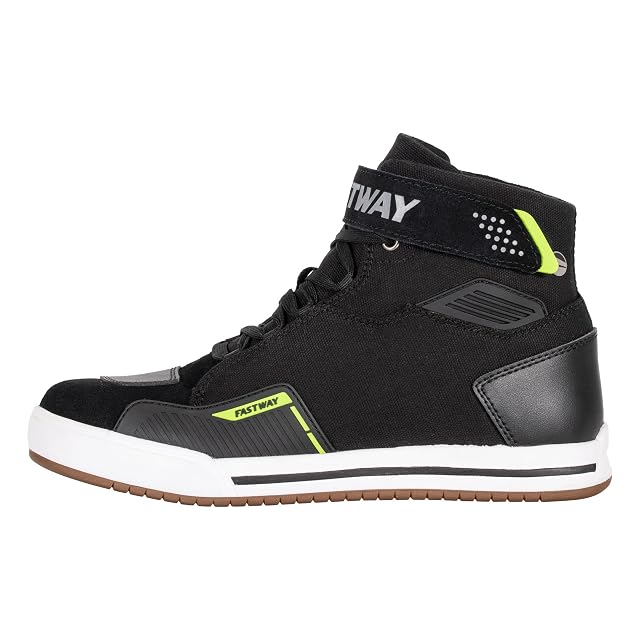
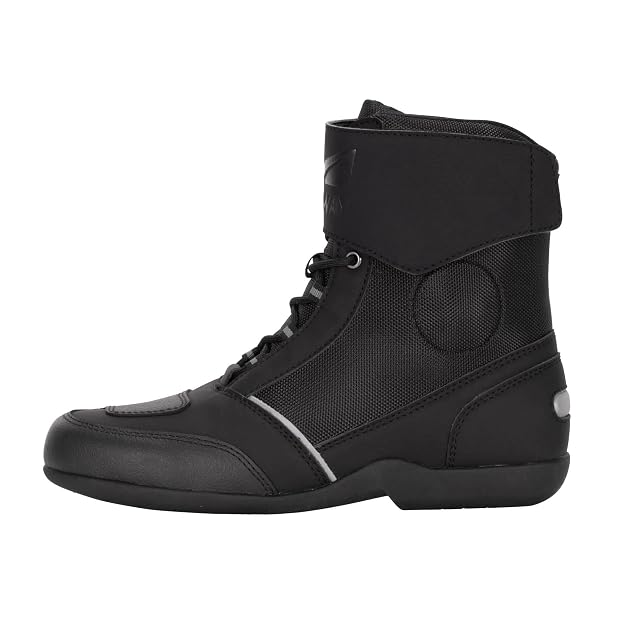
A shift lever pad on the left toe.
It costs a maker almost nothing, it never appears on footwear designed as a trainer, and together with an ankle cup it is the fastest way to tell riding shoes from ordinary ones with a logo. Both of this brand’s shoes publish it.
That matters more on this shelf than anywhere else: the whole argument for a city riding shoe is that footwear which can be worn at work is footwear that is on your feet every ride.
The claim without a document
CE, cited without naming the standard or any level.
EN 13634 is the standard for motorcyclists’ footwear, and it publishes levels across several separate properties — height, abrasion, cut resistance, transverse rigidity, ankle impact. A boot can reach the higher level on one and the lower on another; the standard classifies them separately for a reason.
Three boots on the same shelf publish the standard, its year and a certificate number. That is the comparison.
One thing to weigh
One of these shoes closes with laces alone, with no strap or flap published to secure them. A lace that comes undone near a drive chain is a real risk, which is why riding designs usually add one.