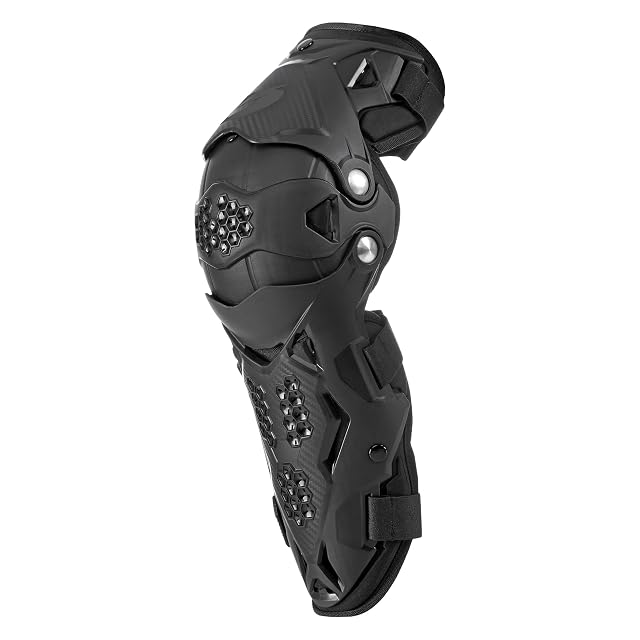
Open the shoulder, elbow, knee and hip pockets in the kit you already own. Take out what is in them.
Certified armour is marked. The standard, the level, the type where one applies, a size. Printed on the piece, because the standard requires it.
A placeholder is blank. Plain foam, no printing. It occupies the pocket and it was never tested against anything.
Reading level 1 against level 2
A transmitted force measured on a rig under a defined impact, with level 2 recording the lower figure.
Reaching level 2 usually takes more material. That means thicker, stiffer and warmer — so it is an arbitration rather than a ranking. A soft, thin level 2 protector that disappears into the pocket is armour that stays in; a thick one that bulges comes out in July and never goes back.
The other properties worth having
Ventilation, because a protector that cooks you is a protector you remove.
Cold flexibility, because a soft protector that stiffens in January changes how the whole garment sits. One protector in this catalogue publishes exactly that.
And the back
The back protector is the separate purchase, with its own standard and its own type — B or FB — describing coverage. Level and type are independent, and a listing giving one without the other has given half the classification.
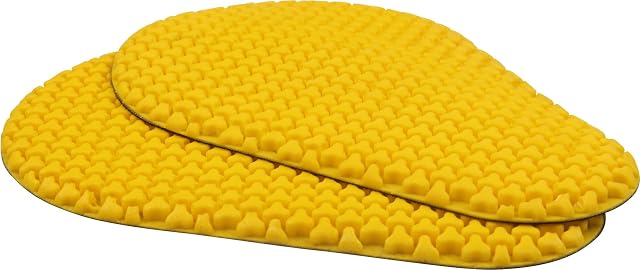
6 mm · EN 1621-1:2012 · shoulder, elbow, knee or hip · flexible in the cold
An ultra-thin 6 mm protector certified to EN 1621-1:2012, usable at four positions, with a patented design stated to keep its flexibility at low temperatures.
Best for: Any armour pocket that will take 6 mm, in a jacket worn through winter.
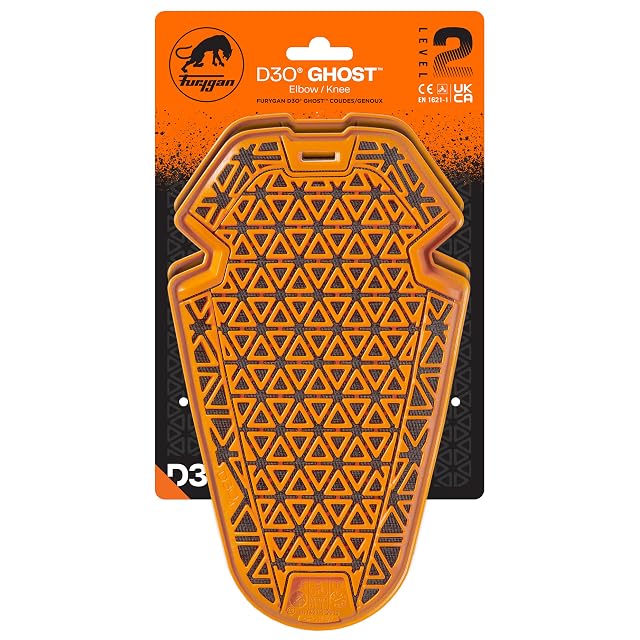
D3O Ghost · level 2 · elbow or knee · one size · the maker cites EN 1621-3
A pair of soft, thin level 2 D3O protectors for elbow or knee pockets, published against a standard the other four protectors in this family do not cite.
Best for: Filling the empty armour pockets of riding trousers with something thin enough to forget.
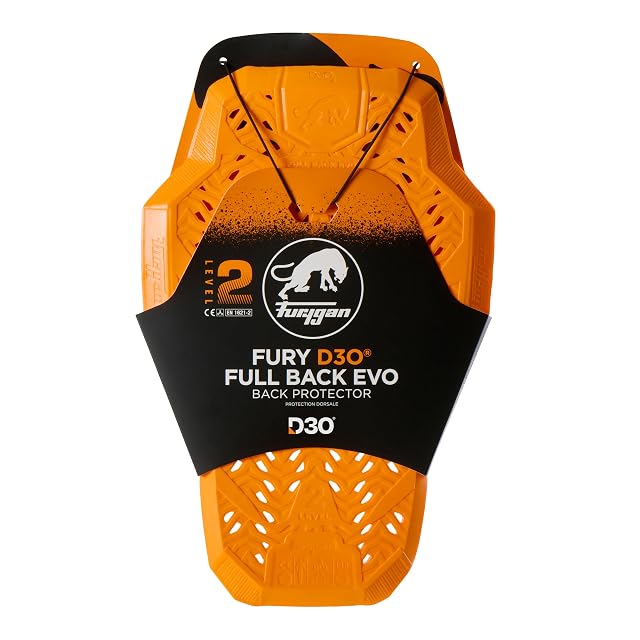
EN 1621-2 level 2 · D3O · breathable and flexible · fits any jacket
A level 2 approved back protector using D3O, published as breathable, flexible and light, with a universal fit the maker states is compatible with any riding jacket.
Best for: Replacing a foam placeholder in a jacket pocket with a certified level 2 piece.
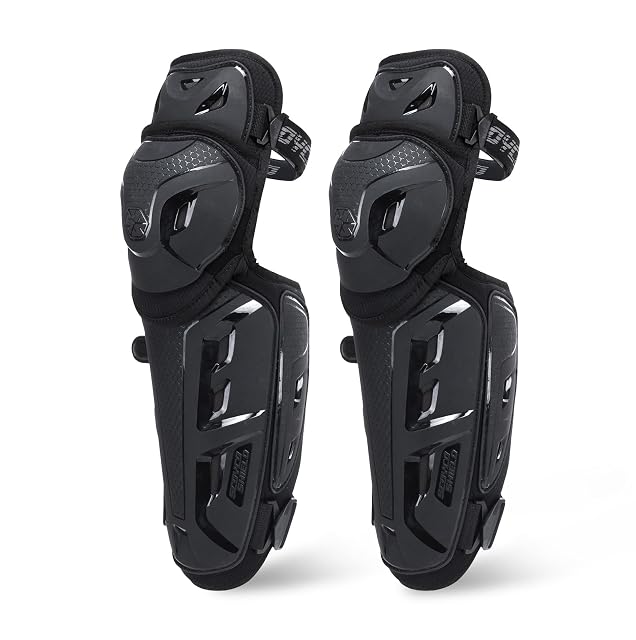
EN 1621-1 impact test · CE level 1 · 3 mm TPU shell · dual-density foam · reflective
Knee guards published as having passed the EN 1621-1 impact test at CE level 1, with a 3 mm TPU shell over dual-density foam, extended shell coverage and reflective strips.
Best for: Riders who want a published standard, a published level and a published thickness on the same guard.
Certified armour carries printed markings: the standard, the level, the type where the standard has one, and a size. A foam placeholder carries nothing. Take the piece out of the pocket and look at it.
Level 1 or level 2?
Level 2 records a lower transmitted force in a defined impact, and it generally takes more material — thicker, stiffer, warmer. A level 2 protector too bulky to lie flat in its pocket sits worse than the level 1 that does.
Which standard covers what?
EN 1621-1 is limb protectors — shoulders, elbows, knees, hips. EN 1621-2 is back protectors, with a type as well as a level. Reading the number on the piece tells you what it was tested as.
The models here come from the catalogue of this site. Specifications are those published by the manufacturer and on the Amazon product page; prices are what Keepa reported on the date below, and both move. The ranking uses declared specifications, the balance of stated strengths and limitations, and price. No product on this site has been physically tested, and nothing here claims otherwise.
Last checked on
Nothing written into the text below is a current price. Where an amount appears in a sentence, it is the reading taken on the day that sentence was written; what a shop is asking at this moment loads beside the product itself, and that is the figure to go by.
The tool we use ourselves
Kit chosen? Now make sure the price is real.
Helmets and riding gear are discounted over and over through the
year — hardest of all in the weeks when nobody is riding, which is
months away from when most of it is bought — and a struck-through
figure on its own says nothing whatever about what the same model was
charged at four weeks ago.
UniverTrack holds a week-by-week history for every
retailer, which means a reduction is judged against a price somebody
actually paid rather than one dreamed up for the sale — and it tells you
when the moment to buy has genuinely come.
Real price historyBuy-now alertsAI buying assistant