Tools
Choosing a chain tool
Half the tools sold as chain tools only do half the job.
By Jean-Benoit Buisson
The two actions
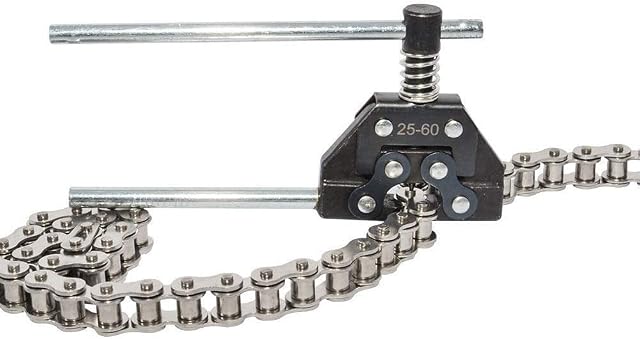
Breaking — pressing a pin out to separate the chain. Every tool here does it.
Riveting — peening a hollow pin over so a joining link holds permanently. Not every tool here does it, and one listing describes only breaking.
A clip link needs pliers and nothing else. A rivet link needs the second action, and on anything with real power a rivet link is the only acceptable join.
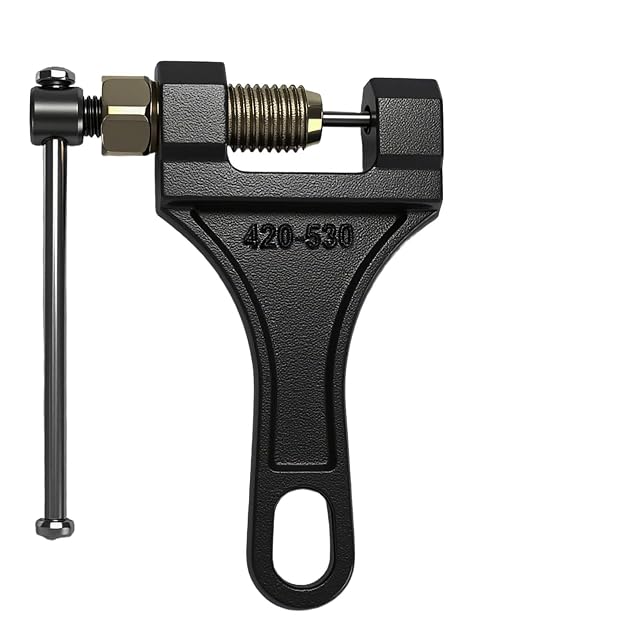
The pitch range. Published ranges here run 35–525 and 35–630. Common motorcycle chains are 420 to 530, comfortably inside both — it is the ends that separate them.
The pin sizes. Three pins at 2.2, 2.9 and 3.8 mm is the standard answer. A single-pin tool at 3.8 mm covers drive chains and not fine ones.
The link type. One tool in this catalogue states it suits hollow-rivet chain links — the only one to name the joining link it was made for. That is the job people get wrong: flare too little and the plate walks off, too much and the link binds.
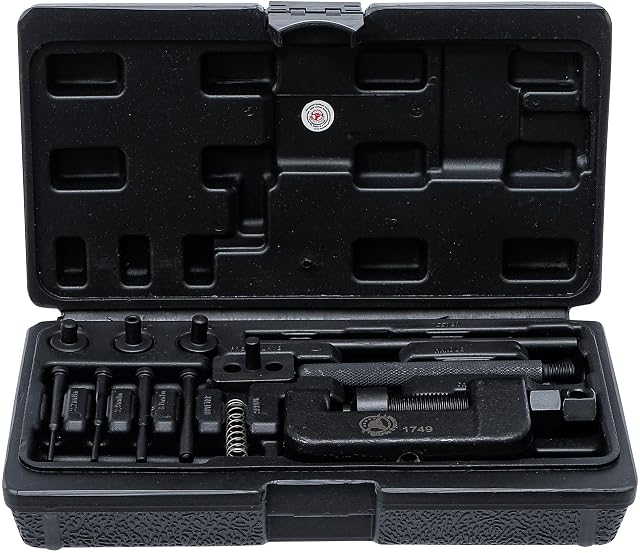
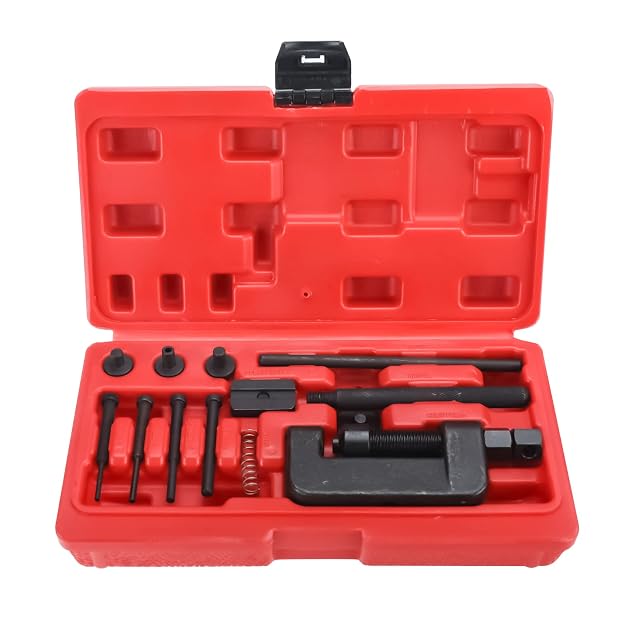
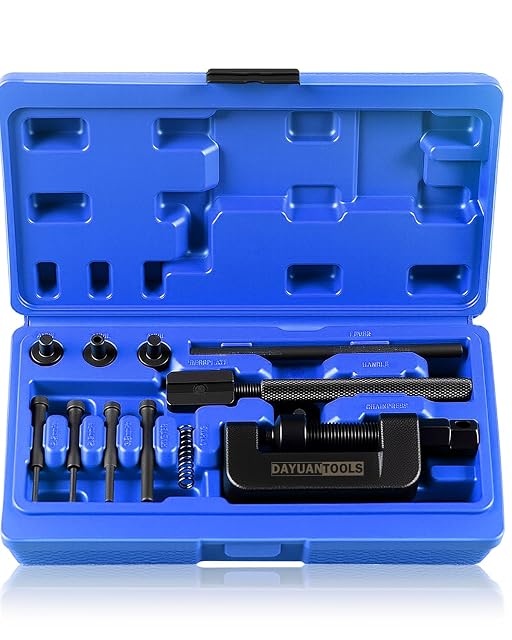
A 13-piece case is about 22 cm long. One tool here is a single 12 cm body that publishes its slot width and its pin diameter.
A chain fails away from the garage. The tool that is with you is the one that matters, and they are genuinely two different products.
The part that breaks
The pressing pin. It takes the whole load and it snaps. One tool here makes it replaceable and puts a spare in the box.