Transport
Strapping a motorcycle in a van
The number printed on a strap is usually the one you must not use.
By Jean-Benoit Buisson
The two ratings, and why it matters
Break load is where the strap fails. It is a test figure.
Working load limit — LC, in daN or kg — is what it may actually restrain. It is roughly a third of the break load.
Three straps in this catalogue publish one number and never say which kind it is. One publishes 1,500 kg break against 500 kg working, which shows exactly the gap. One publishes LC in daN against DIN EN 12195-2, which is the European way of stating it precisely.
Comparing a working load against a break load and choosing the larger number is how a strap gets overloaded.
The arrangement
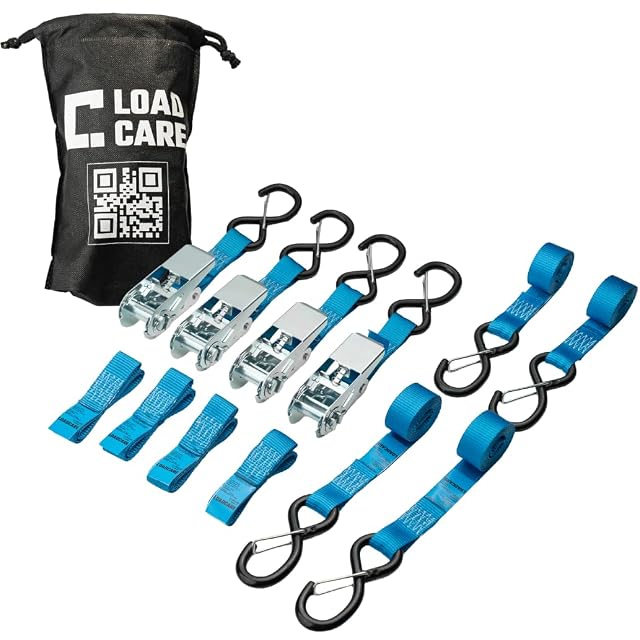
Four straps. Two forward, two back.
Compress the front suspension. A strap tightened onto an extended fork goes slack the moment the fork extends over a bump. Compressed, it stays tight.
Soft loops at every contact. A hook onto a handlebar takes the finish off it and can bend a lever mount; a loop round the part with the hook in the loop means nothing metal touches the machine.
The two details that stop straps failing quietly
Safety clips on the hooks. A strap goes momentarily slack over a bump and an unclipped S-hook falls out of its anchor. Nothing dramatic happens — the machine is simply held by three straps, and nobody notices until it moves.
The label sewn to the webbing. That is where the real figures live, and it is still readable in three years when the packaging is gone.
The stand that makes it easy
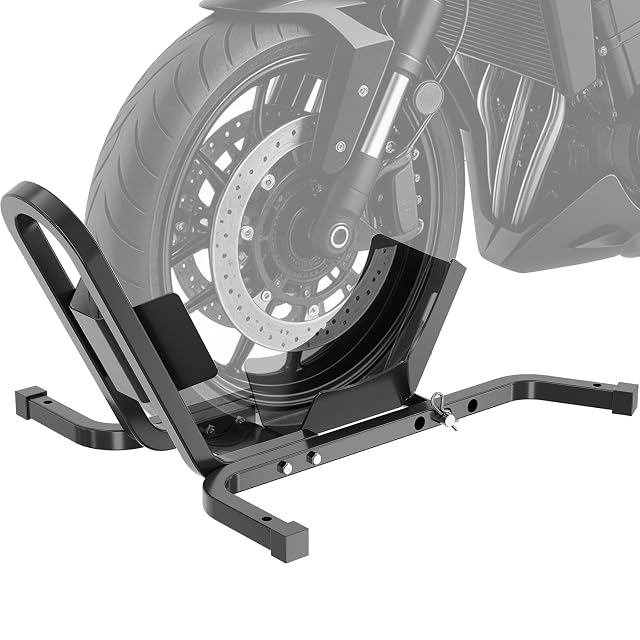
A front wheel chock bolted to the floor. The wheel is captive, the machine stands upright, and the straps only have to hold it there.