Skip to content

Riding kit for cold weather

You are not cold because it is cold. You are cold because air is moving through you at road speed.

Cold on a motorcycle is wind

Still air at 5 °C is a pullover. The same air at 100 km/h through a gap at your wrist is a different problem entirely, and insulation does not solve it — a windproof layer does.

That is why the order matters: stop the air first, then insulate.

The four gaps, in the order they cost you

Wrists. A short glove cuff under a jacket sleeve funnels air up your arm. Get the overlap right and the gloves stop being the problem.

Neck. A balaclava long enough to tuck, with a hem that stays tucked.

The small of the back. A jacket rides up in a riding position. A jacket that zips to the trousers does not, which is most of the argument for buying a set.

Ankles. Where trousers sit above a boot, not inside it.

What a base layer is for in winter

Not warmth — moving sweat. You sweat walking to the bike and then sit in it for two hours. A base layer that moves moisture keeps you from getting cold from the inside, which is the failure that feels like the kit not working.

Look for a fabric weight and a temperature range together. One set in this catalogue publishes both.

The helmet

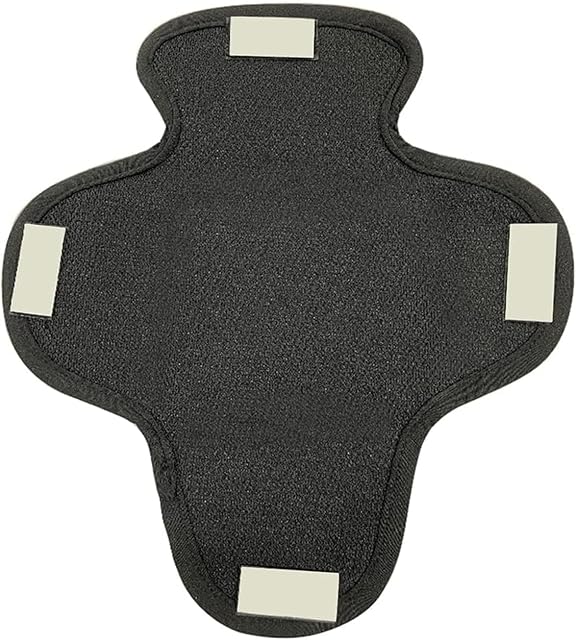
A liner keeps the padding dry, and a dry liner is a warmer one. It is also the cheapest winter upgrade there is.
The picks, and why they run in that order

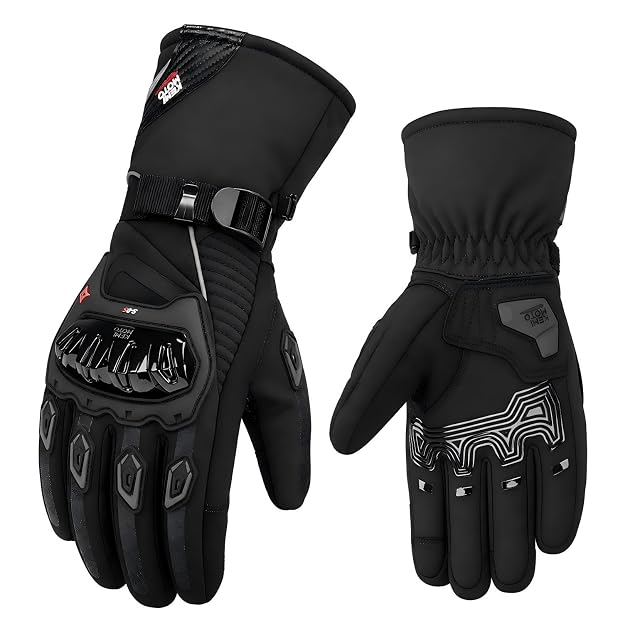
  1. KEMIMOTO Winter waterproof

    Reinforced back of hand · side reinforcement · non-slip palm · touchscreen

    A waterproof winter glove with a reinforced construction across the back of the hand, side reinforcements, durable finger detailing and a non-slip palm for grip on the bars.

    Best for: Winter riding where grip on the bars in wet cold is the main complaint.

    ≈ €33

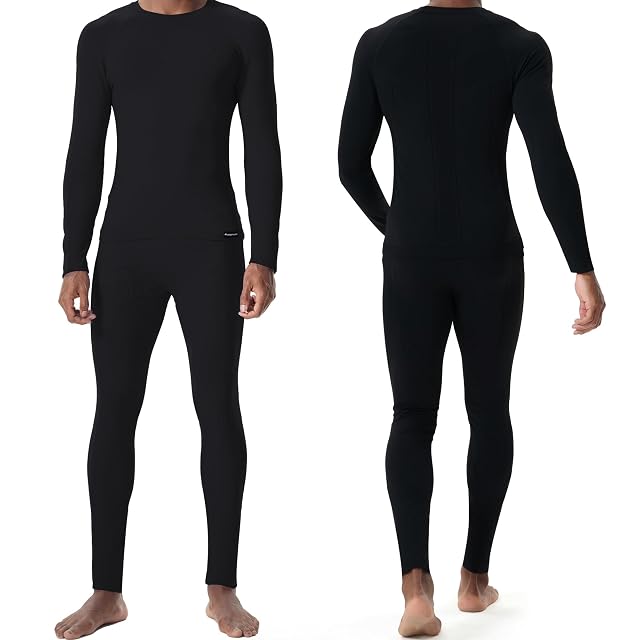
  2. FlowFlex Thermal set

    94% nylon / 6% elastane · 200 g/m² · −15 °C to 10 °C · 220% stretch · dries in 20 min

    A seamless thermal set in 94% nylon and 6% elastane at 200 g/m², published for a temperature range of −15 °C to 10 °C, stretching to 220% and drying in twenty minutes.

    Best for: Winter riding where you want to know before buying which temperatures the layer was built for.

    ≈ €21

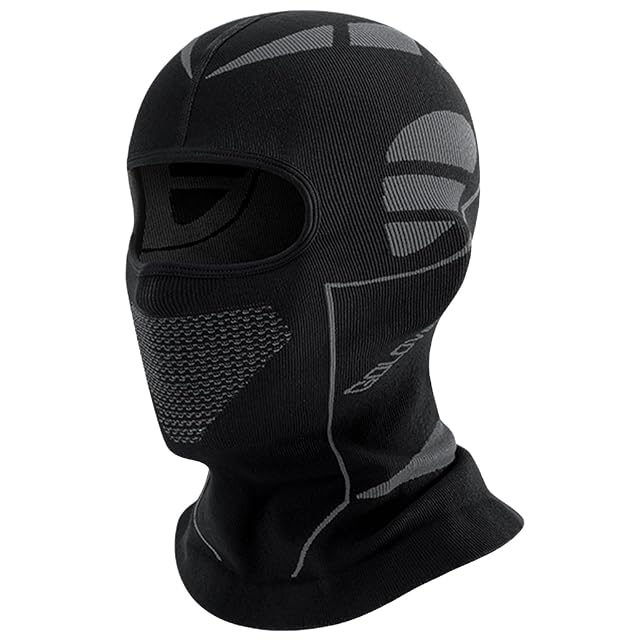
  3. KMKANPO Winter balaclava

    23 × 35 cm · one-piece knit · 3D nose structure · mesh at mouth and nose

    A knitted winter balaclava of 23 × 35 cm with a three-dimensional nose structure that sits close without pressure, and mesh at the mouth and nose to open the breathing area.

    Best for: Cold-weather riding where fogging the visor is the problem to solve.

    ≈ £5 / €7

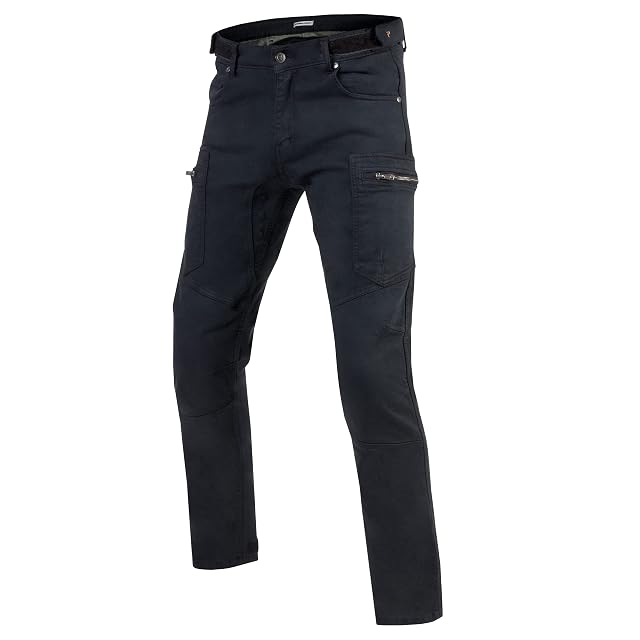
  4. REBELHORN Urban III

    Aramid panels · level 2 knee and hip protectors · ventilation holes

    Riding jeans with aramid fibre panels sewn into knee, hip and waist areas and CE level 2 protectors at knees and hips, with ventilation holes.

    Best for: A rider who wants riding jeans whose construction is published rather than implied.

    ≈ €130

The questions that come up first

Thicker gloves or heated grips?

Grips warm the palm and let you keep a thinner glove, so you can still feel the lever. Gloves warm the whole hand and come with you between machines. Thick gloves alone cost you feel at the control you use most.

What does a base layer weight tell me?

Around 150 g/m² is a summer layer and around 250 a deep-winter one. One set in this catalogue publishes 200 g/m² with a stated range down to −15 °C, which is the pair of figures that actually describes a season.

Where does the cold actually get in?

The gaps. Wrists, neck, the small of the back where a jacket rides up, and ankles. Sealing those four does more than any amount of extra insulation over the chest.

Why each one, and for whom

KEMIMOTO Winter waterproof · 33 €

For : Winter riding where grip on the bars in wet cold is the main complaint.

Main strength : The only glove here that publishes anything about the palm, which is where a hand contacts

Main limitation : No glove standard or protection level cited

Read the full review →

FlowFlex Thermal set · 21 €

For : Winter riding where you want to know before buying which temperatures the layer was built for.

Main strength : Publishes five separate figures where its neighbours publish adjectives — weight, temperature range, stretch, drying time and cut adjustment

Main limitation : Nothing published about abrasion behaviour — see the Alpinestars listing in this family

Read the full review →

KMKANPO Winter balaclava · 5 €

For : Cold-weather riding where fogging the visor is the problem to solve.

Main strength : Publishes dimensions, which no other balaclava here does

Main limitation : No fabric composition published at all

Read the full review →

REBELHORN Urban III · 130 €

For : A rider who wants riding jeans whose construction is published rather than implied.

Main strength : The only trousers here that publish both an abrasion lining and the armour level

Main limitation : No height adjustment published for the knee pockets, which is what places armour on the knee

Read the full review →

GisWell Modular helmet liner · 10 €

For : A helmet that moves slightly on the head and needs its fit taken up.

Main strength : Names both components — polyester fabric and high-density foam — separately

Main limitation : No thickness published, which is what decides whether it tightens a helmet too far

Read the full review →

What each price bracket buys

Deciding in one line

How this guide is built

The models here come from the catalogue of this site. Specifications are those published by the manufacturer and on the Amazon product page; prices are what Keepa reported on the date below, and both move. The ranking uses declared specifications, the balance of stated strengths and limitations, and price. No product on this site has been physically tested, and nothing here claims otherwise.

Last checked on

Nothing written into the text below is a current price. Where an amount appears in a sentence, it is the reading taken on the day that sentence was written; what a shop is asking at this moment loads beside the product itself, and that is the figure to go by.

The tool we use ourselves

Kit chosen? Now make sure the price is real.

Helmets and riding gear are discounted over and over through the year — hardest of all in the weeks when nobody is riding, which is months away from when most of it is bought — and a struck-through figure on its own says nothing whatever about what the same model was charged at four weeks ago. UniverTrack holds a week-by-week history for every retailer, which means a reduction is judged against a price somebody actually paid rather than one dreamed up for the sale — and it tells you when the moment to buy has genuinely come.

Real price historyBuy-now alertsAI buying assistant
Try free for 14 days →
No commitment · Cancel in one click · 5 languages