Tyres
Tyre pressure and punctures
Two tools, two limits, and almost nobody publishes either.
By Jean-Benoit Buisson
A gauge has one specification
Its tolerance.
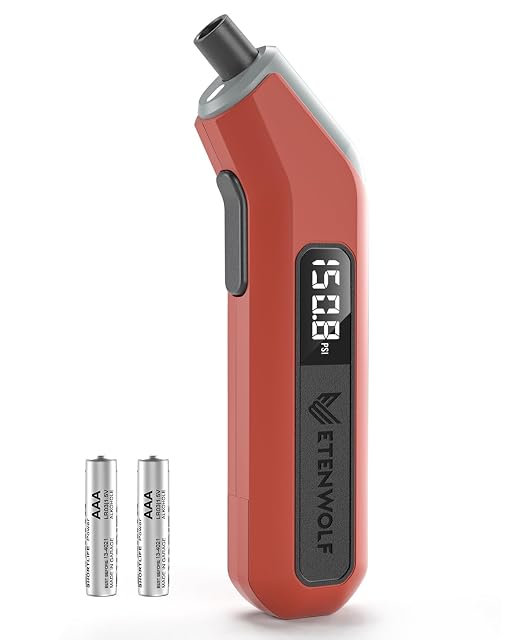
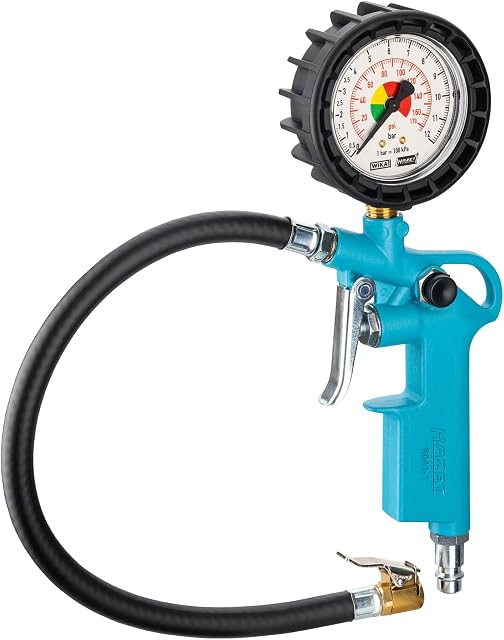
Three gauges in this catalogue publish none. Two publish one, and they differ by a factor of five: ±0.06 bar cited against a named standard and grade, against ±0.30 bar.
On a motorcycle tyre at 2.5 bar that is the difference between 2.4% and 12% — between a reading you act on and one you round. The cheaper of the two publishes the better figure.
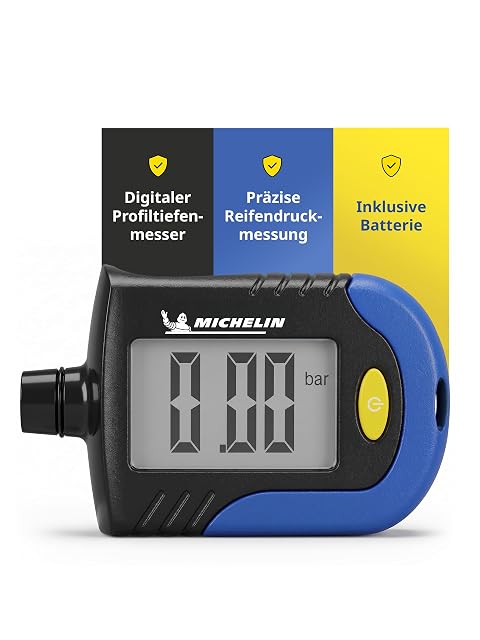
Two other things worth having: thermal compensation, because a sensor drifts with its own temperature, and a gauge that needs no battery, because a digital one with a flat cell reads nothing at all.
Check it cold
Riding heats the air and raises the pressure. The figure in your manual is a cold one, and a reading taken after a ride is a different measurement.
The two limits of every plug kit
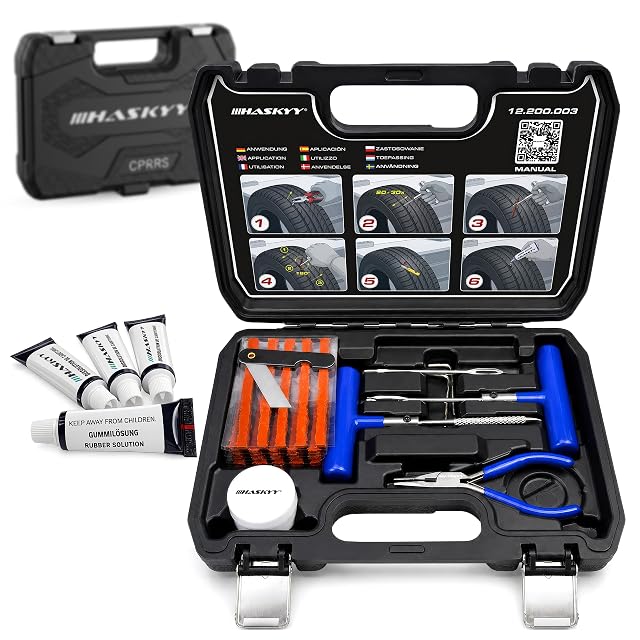
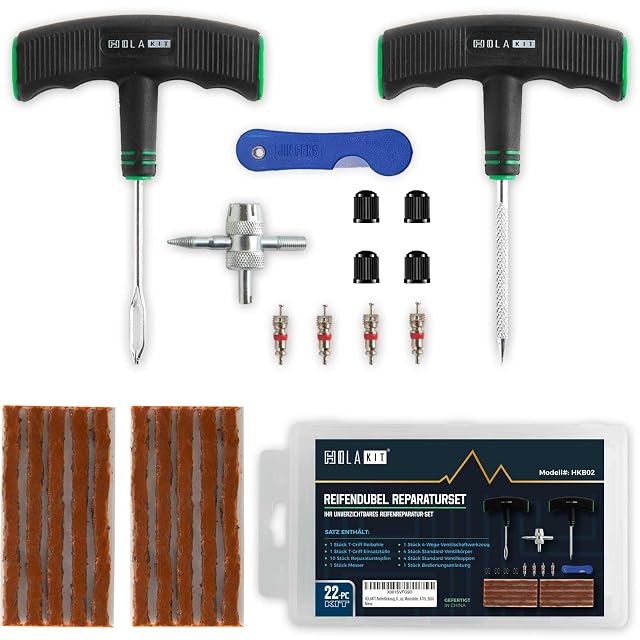
Tubeless only. A plug seals the rubber carcass from outside. A tyre with an inner tube has a bladder inside that no plug reaches — and many motorcycles on spoked wheels run tubes. On those, a plug kit does nothing.
Tread only. A sidewall flexes on every revolution and no repair holds there.
One kit in this catalogue publishes both limits in its own bullets, in capitals. The others publish neither.
The step everyone skips once
Grease the insertion needle. Without lubricant the plug drags and tears going in, or the needle jams half way. One maker shouts it in its own listing, which is where it belongs.